
THE PHYSICS
A wobbling coin
Diaconis, Holmes and Montgomery showed that real flips precess, so a coin spends slightly longer with its starting face up. They put the same-side chance at about 51%.
See the numbers doodleflip
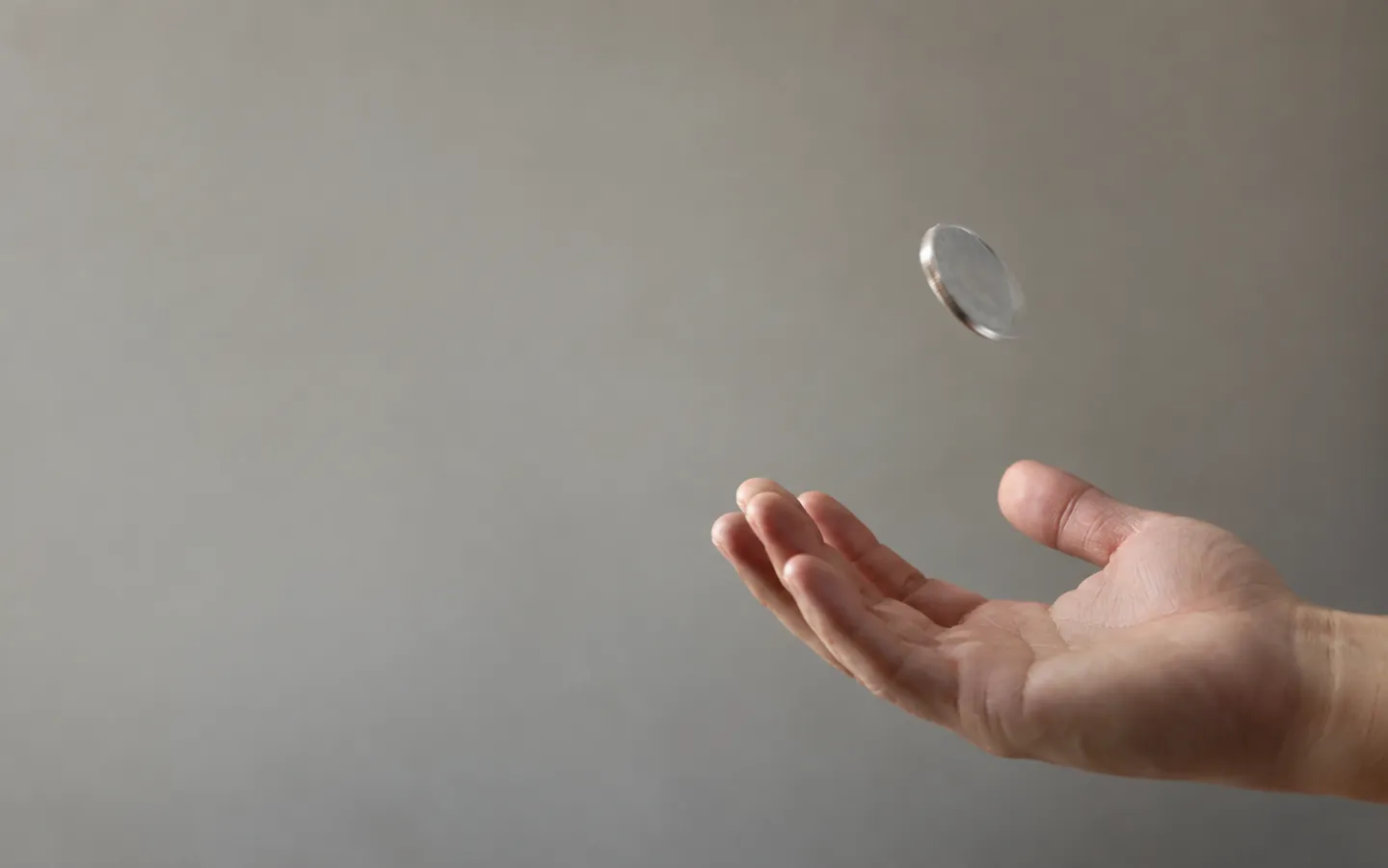
WHAT THE RESEARCH SAYS
A coin toss is physics, not magic.
Mathematicians showed that a flipped coin remembers how it started, very slightly. A team of researchers then flipped coins 350,757 times to check. The result: heads and tails are even, but the starting side wins about 50.8% of the time.
50.8% same side up
Check a flipTHE SHORT ANSWER
How fair a toss is depends on how it is done.
Flipped and caught is close to fair. Spun on a table is not.
THE PHYSICS
Diaconis, Holmes and Montgomery showed that real flips precess, so a coin spends slightly longer with its starting face up. They put the same-side chance at about 51%.
See the numbersTHE TEST
Bartoš and 49 colleagues found coins landed the same side up 50.8% of the time, while heads and tails came up equally often.
Check a flipSPINNING
Pennies spun on their edge by Berkeley students showed a pronounced proportion of tails; some came up heads fewer than 10% of the time.
Why spinning differs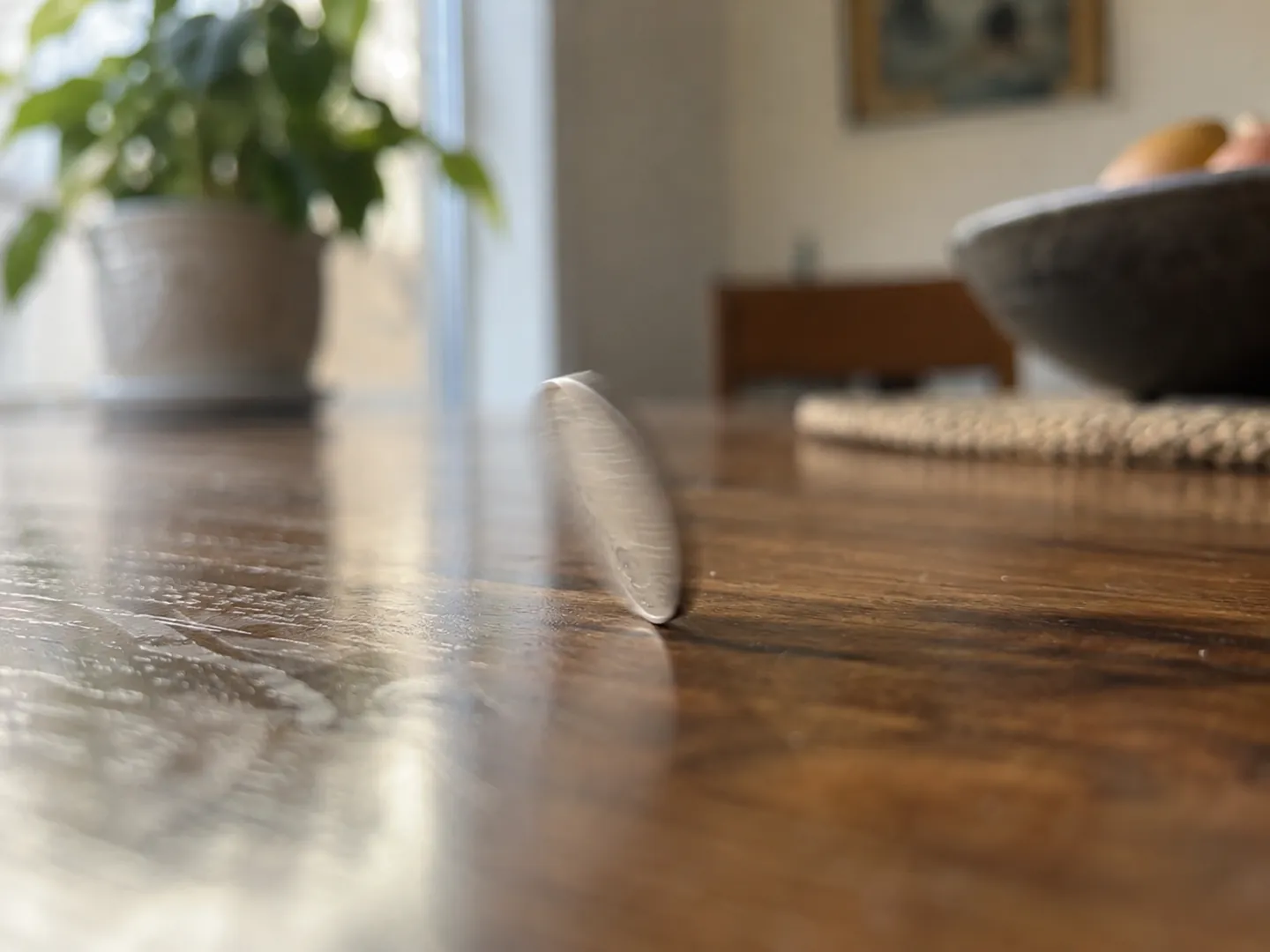
FOUR WAYS TO TRY IT
You can see these effects with a coin and some patience. A small bias needs a lot of flips to show up.
If nobody sees which side starts up, the same-side edge cannot favour anyone, and heads and tails are even.
The physics behind the 51% figure assumes a vigorous flip caught in the hand without bouncing.
Spinning on a table is much less fair than flipping, depending on the coin's edge and balance.
Berkeley's David Aldous reckoned that with 40,000 tosses a 0.8% bias would quite likely show up clearly. A few dozen flips will not show it.
TWO NUMBERS WORTH KNOWING
One figure from the biggest coin-flipping study,
one on the rarest outcome of all.
50.8%
Flips landing the way they started
Across 350,757 flips, the probability of a same-side outcome was 0.508, with a 95% credible interval of 0.506 to 0.509. The bias shrank as people flipped more coins, perhaps as practice made flips less wobbly.
SAME SIDE · BARTOŠ ET AL.
1 in 6,000
Chance a US nickel lands on its edge
Using theory and experiment, Murray and Teare concluded a US nickel lands on its edge about once in 6,000 tosses, as cited by Diaconis, Holmes and Montgomery.
ON ITS EDGE · MURRAY AND TEARE
Earlier large hand-counted studies include Kerrich's 10,000 flips, Pearson's 24,000 and Lock's 30,000. Kerrich's coins bounced on a table, so the precession analysis does not apply to them.
A QUICK FLIP CHECK
Pick a way of tossing a coin. The bar shows how far the research suggests it can drift from a fair 50:50.
Based on Diaconis, Holmes and Montgomery (SIAM Review, 2007) and Bartoš and colleagues (350,757 flips).
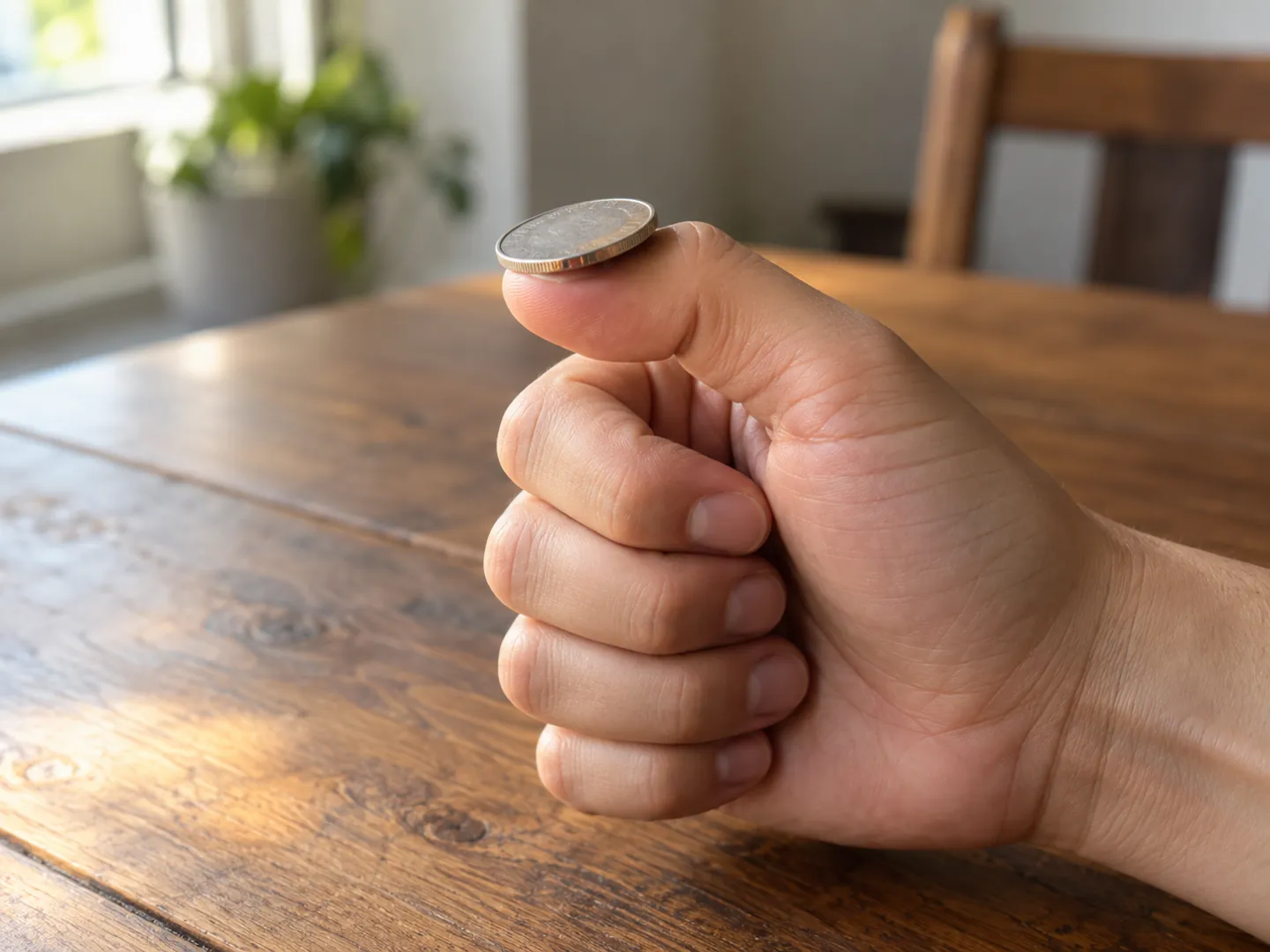
WHY SPINNING DIFFERS
With a coin-tossing machine, Diaconis and colleagues made a coin started heads up land heads up every time. Real hands vary the launch enough to make outcomes close to random, but the tilt of the spin axis leaves a small memory.
A coin spun on its edge is different: the result depends on the exact shape of the edge and the centre of gravity. Weighted coins made no difference when flipped and caught, but tended to land heavy side up when spun.
Questions
Between heads and tails, yes: 350,757 real flips came up heads 50.0% of the time. But a flipped coin lands on the side it started on about 50.8% of the time.
Real flips do not spin neatly end over end. The axis tilts and precesses, so the coin spends slightly more of its flight with the starting face up, as Diaconis, Holmes and Montgomery showed.
No. Bartoš and colleagues found considerable variation between people, and the bias got smaller as people flipped more coins.
No. Diaconis and colleagues say spun coins can show huge variations from 50:50. Berkeley students spinning pennies got a pronounced share of tails.
Rarely. Murray and Teare estimated a US nickel lands on its edge about 1 in 6,000 tosses. Harvard researchers Yong and Mahadevan showed the chance depends on the coin's thickness compared with its width.
Updated
ABOUT THIS NAME
It is not open for bids or leasing right now. Browse the catalogue for names you can bid on or lease today.

